
Every time you unlock your phone, ask a voice assistant a question, or watch a smart device respond instantly, something extraordinary is happening inside a chip smaller than your fingernail.
There are no visible wires. No moving parts. Just layers of engineered intelligence processing millions of signals and decisions every second—silently, seamlessly, and at astonishing speed.
But how does it actually work?
So... Do Chips Actually Think?
Not the way humans do — but what they do is equally impressive.
Inside every chip are billions of tiny switches called transistors. They flip between ON and OFF at breathtaking speeds, following logical instructions to process information and deliver responses in real time. This is made possible by VLSI — Very Large Scale Integration — the engineering marvel that squeezes billions of these switches onto something the size of a fingernail.
No guesswork. No delays. Just logic executed with extraordinary speed and precision.
That invisible process is what makes your GPS reroute in seconds, your laptop render graphics instantly, and your smartwatch track your heart rate without missing a beat.
Why Should You Care?
Because chips are no longer just inside computers.
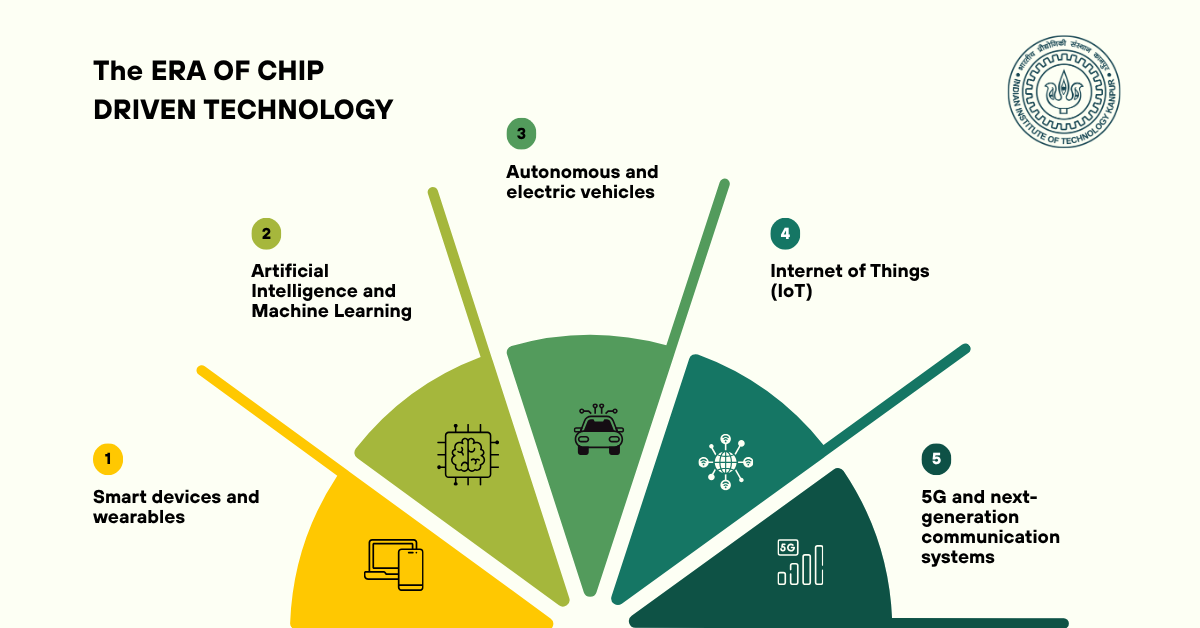
They are inside electric vehicles making split-second safety decisions. Inside AI systems learning from data in real time. Inside medical devices monitoring patients around the clock. Inside satellites, factory robots, and the 5G infrastructure being rolled out across the world right now.
Nearly every modern industry runs on semiconductor technology—and engineers with expertise in chip design and microelectronics are among the most in-demand professionals in today’s global job market.
A Career Path Built for Long-Term Growth
The semiconductor and VLSI ecosystem is no longer a niche segment—it underpins the modern global economy. Career opportunities span VLSI design and verification, chip architecture, embedded systems, AI hardware engineering, and semiconductor manufacturing—roles known for strong compensation, international mobility, and long-term relevance.
What makes this field particularly compelling is the demand–supply gap. Industry demand continues to significantly outpace the availability of deeply skilled professionals. For engineers willing to build serious technical depth, the opportunity window is wide open.
This shift is also visible in how professionals are investing in their education. Enrollment in advanced, hardware-focused online M.Tech. programs has steadily increased, reflecting a growing recognition that structured, specialized expertise in microelectronics is a long-term career advantage.
Final Thought
The future belongs to those who build the technology — not just use it.
Understanding how chips think and respond is not just intellectually fascinating — it is professionally transformative. For working engineers looking to build that depth without stepping away from their careers, programs like IIT Kanpur's online degree offer exactly that balance — academic rigour, faculty-led learning, and the flexibility that a demanding professional life requires.
Among these, the IIT Kanpur Online M.Tech. in Microelectronics and VLSI stands out as a program built for engineers who are serious about where the industry is heading — and want to be among those shaping it.
Because upgrading a qualification is one thing. Transforming a career trajectory is another.
Step into the world of chips. Design the future.